Rh Factor During Pregnancy
Rh Factor During Pregnancy
When Does the Rh Factor Play a Role
The Rh factor is a characteristic of your blood type—most people are “Rh-positive,” while a smaller proportion are “Rh-negative.” During pregnancy, it plays a role in only one specific scenario, and even then, thanks to good prenatal care, problems are now rare. We’ll explain what it’s all about and how we prevent complications—so you can rest easy.
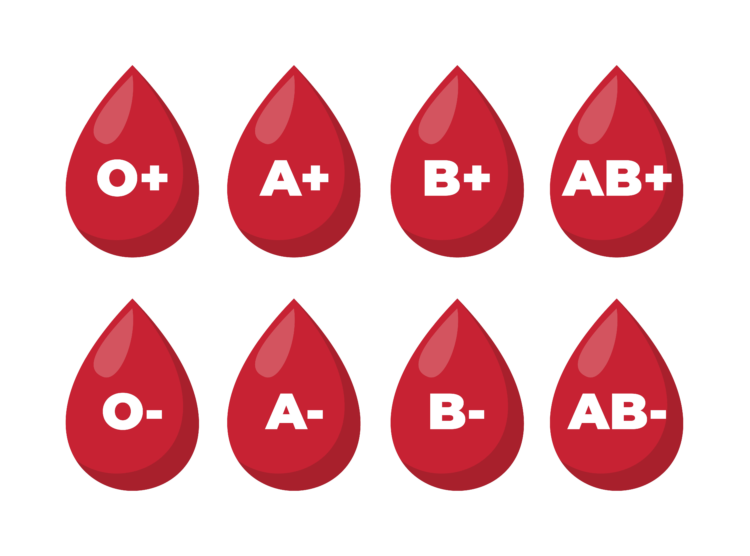
In addition to the well-known blood groups A, B, AB, and 0, we distinguish whether someone is Rh-positive (about 85%) or Rh-negative (about 15%). “A Rh-positive” therefore means blood group A with a positive Rh factor. We determine your blood group and Rh factor with a blood test right at the start of your pregnancy—along with a screening test for any existing antibodies.
The Rh factor becomes important only in one scenario: when the mother is Rh-negative and her child is Rh-positive (which the child has inherited from the father). As long as the mother’s and child’s blood remain separate, everything goes well. During childbirth—but also in cases of bleeding, a miscarriage or ectopic pregnancy, an amniocentesis, an accident, or sometimes for no apparent reason—small amounts of the baby’s blood can enter the mother’s bloodstream. Her immune system then produces antibodies against the “foreign” Rh factor (this is called sensitization). In this first pregnancy, this usually has no consequences.
The next pregnancy is crucial. Once the mother is sensitized, her immune system reacts quickly and strongly to another Rh-positive baby: The antibodies cross the placenta to the baby and destroy its red blood cells. This can result in fetal anemia, as well as jaundice; in severe cases, it can lead to a dangerous accumulation of fluid in the baby (hydrops). In the past, this often led to serious complications, including stillbirths—but today, this can be prevented.
The key is to prevent sensitization from occurring in the first place. To do this, a Rh-negative mother receives an injection of anti-D immunoglobulin at the right time. This acts like a passive vaccination: it intercepts the fetal blood cells that have crossed the placenta before the mother’s immune system can react to them. We administer it after sensitizing events (such as bleeding, amniocentesis, or a miscarriage) and after birth, provided the child is Rh-positive.
In the past, all Rh-negative pregnant women received anti-D as a precaution. Today, we take a more targeted approach: Between the 18th and 24th weeks, the baby’s Rh factor can be determined from a simple blood sample taken from the mother—based on the baby’s genetic material circulating in the mother’s blood. If the baby is Rh-negative, there is no risk at all: in that case, no anti-D treatment is needed either during pregnancy or after birth. If the baby is Rh-positive, you will receive the prophylaxis as usual around the 28th week (SGGG, Expert Letter No. 94).
Anti-D immunoglobulin is a precious resource: It is derived from blood plasma donations and, to this day, cannot be produced artificially—so there is only as much of it as is donated. By using the child’s Rh typing to administer Anti-D only when there is a genuine risk, we avoid about 40% of such administrations in Switzerland. This conserves this scarce resource—and spares many women an injection they don’t actually need.
If you are Rh-negative, we’ll take care of everything for you: determining the baby’s Rh factor, administering prophylaxis at the right time, and administering the injection after birth, if necessary. The baby’s Rh factor testing and the administration of Anti-D are covered by health insurance. If you already have antibodies, we’ll closely monitor your pregnancy and consult a specialized center if needed. You don’t need to do anything else—and you can rest assured: thanks to these preventive measures, serious problems caused by Rh incompatibility have become very rare today.
More articles
on this topic
No posts found.
Medical content reviewed by Michael Singer, M.D. –