Fibroids – benign muscle tumors of the uterus
Fibroids – benign muscle tumors of the uterus
Benign and common
Fibroids are benign muscle growths in the uterus—and they are extremely common. The vast majority cause no symptoms at all and never require treatment. If they do cause problems, there are many treatment options available today, often without major surgery and while preserving the uterus. On this page, we’ll explain how common and harmless fibroids are, what symptoms they can cause, and what treatments are available—always tailored to your specific situation.
Fibroids are among the most common benign conditions of all: By the age of 50, most women develop one or more fibroids—estimates range from 70 to over 80 percent (Baird et al. 2003)—often without ever noticing them. They are not “your fault” and only very rarely become malignant. In short: A diagnosis of fibroids is usually a benign incidental finding—no cause for concern.
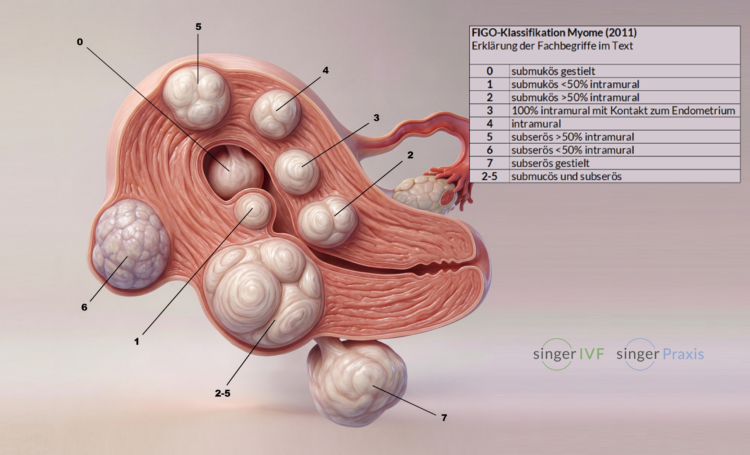
Fibroids grow from the muscular layer of the uterus and are nourished by the body’s own hormones (primarily estrogen). The location, rather than the size, is the key factor in determining whether symptoms occur (Munro et al. 2024):
We usually discover fibroids incidentally during an ultrasound exam—many women are completely unaware that they have one. If treatment is being considered, we determine the exact location and size (via ultrasound, supplemented by an MRI if necessary), as this determines the best course of action.
Most fibroids cause no symptoms. When they do cause symptoms, they primarily include: heavy or prolonged menstrual bleeding (with a risk of anemia), a feeling of pressure or fullness in the lower abdomen, pain, pressure on the bladder or bowel (frequent urge to urinate, constipation), and, less commonly, difficulties with family planning or during pregnancy. Which symptoms occur depends on the location, size, and growth of the fibroids.
A fibroid does not automatically require treatment. If it causes no symptoms, we simply monitor it closely with ultrasound—many fibroids remain stable for years. Only when a fibroid causes symptoms or grows rapidly do we discuss the next steps together. Even a growing fibroid is almost always benign—malignant changes are very rare.
If treatment is necessary, it is targeted—based on your symptoms, the location and growth of the fibroid, and your preferences, such as whether you wish to have children or would like to preserve your uterus. We’ll choose the approach together. There are three options, which can also be combined:
Most fibroids do not prevent pregnancy—many women with fibroids conceive without any problems. Submucosal or very large fibroids, in particular, can affect fertility or the course of a pregnancy. If you are planning a family, we will work with you individually to determine whether and how a fibroid should be treated before pregnancy (more on this → “family planning”).
More articles
on this topic
No posts found.
Medical content reviewed by Michael Singer, M.D. –