Hormonal Birth Control – The Pill, IUD, Implant, and More
Hormonal Birth Control – The Pill, IUD, Implant, and More
Safe and Versatile Contraception
Hormonal birth control is safe, well-established, and surprisingly versatile. There isn’t just one method, but a whole range—from the daily pill to the IUD to the implant, which provides protection for years. And many of them do more than just prevent pregnancy: they improve skin problems, relieve pain, or reduce heavy bleeding. On this page, we’ll explain how hormonal birth control works, what methods are available, what they can do—and, in all honesty, what risks are involved. Then, together, we’ll figure out which one is right for you.
All hormonal methods use the body’s own hormones—estrogen and progestin, or progestin alone—to work in three ways: They suppress ovulation, thicken the cervical mucus (making it harder for sperm to pass through), and keep the uterine lining thin. There are two main categories, and this distinction is important:
This difference primarily determines two things: the risk of thrombosis (which depends on estrogen) and which method is suitable for whom.
These methods contain both hormones. They provide good control over the menstrual cycle, usually make periods shorter and lighter, and often improve skin condition. However, they also share a common risk profile (see below).
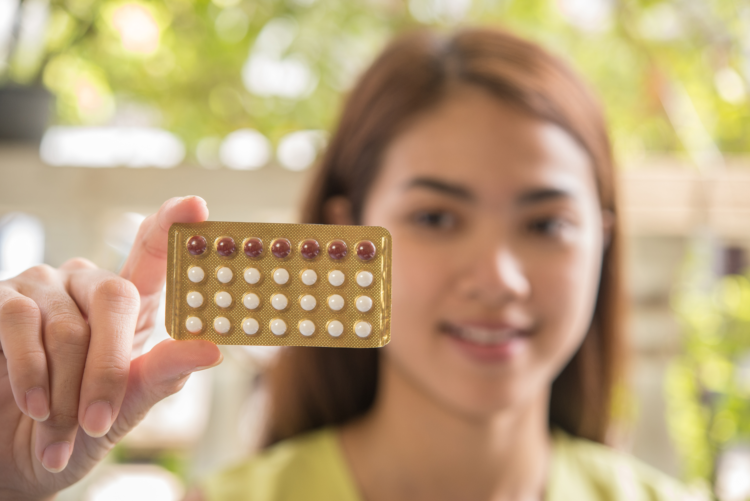
The pill is the best-known method: one tablet daily, typically taken for three weeks followed by a one-week break during which bleeding occurs. It’s easy to manage, and periods can be easily postponed for vacations. Its only drawback: you have to remember to take it every day—if you tend to forget, you’re better off with a different method.
The vaginal ring is inserted once a month, remains in place for three weeks, and releases hormones steadily. Advantage: no need to think about it every day. You do have to get used to inserting it.
The patch is changed weekly and releases hormones through the skin—convenient for anyone who struggles with taking a daily pill. It’s visible and rarely comes off.
The extended cycle isn’t a separate method, but rather a way of using the pill or ring: you take the pill or use the ring continuously without a break, so that bleeding occurs less frequently or stops altogether. This is medically safe—monthly bleeding while on the pill isn’t necessary—and is particularly helpful for PMS, menstrual cramps, migraines during the pill break, endometriosis, or acne. There may be breakthrough bleeding in the first few months; after stopping the pill, your cycle and fertility return quickly.
These methods do not contain estrogen. This makes them a good choice when estrogen is not suitable—for example, in cases of migraines with aura, for women over 35 who smoke, those with a history of thrombosis, or while breastfeeding. They do not carry any estrogen-related risks of thrombosis or cardiovascular disease. Typically, the bleeding pattern changes: periods often become lighter or stop altogether, and irregular spotting may occur.
The progestin-only pill (formerly known as the “mini-pill”) is a daily tablet that contains no estrogen. Modern formulations—such as those containing desogestrel (Cerazette) or drospirenone (Slinda)—are reliable and are more forgiving of missed doses than the older mini-pills. It is also suitable for use while breastfeeding.
The hormonal IUD is inserted into the uterus and provides protection for three to eight years, depending on the model (Mirena, Kyleena, Jaydess). It is one of the safest methods available because there’s no way to forget to take it. It primarily releases the hormone locally, so very little enters the body, and it makes periods significantly lighter—often they stop altogether. That’s exactly why we also use it to treat heavy bleeding.
Uterus with progesterone-releasing IUD inserted (Mirena®, Kyleena®)
The rod (implant) is a matchstick-sized rod that is inserted under the skin on the upper arm and provides protection for three years—here, too, there’s no risk of forgetting to take it. Irregular bleeding is possible and is the most common reason for having it removed early.
The 3-month shot is administered every three months and is an option when other methods aren’t feasible. Keep in mind: After stopping the shot, it can take several months for fertility to return (unlike with all other methods), and bone density may temporarily decrease slightly. For young women, it’s therefore rarely the first choice.
The IUD and the implant are classified as LARC (“long-acting reversible contraception”): once inserted, they provide protection for years without any daily effort—and are suitable for women of all ages, including young women who do not yet have children.
Hormonal contraception is among the safest methods available. The most reliable are those where you can’t forget to take anything: hormonal IUDs and implants provide nearly continuous protection for years. The pill, ring, and patch are also very safe when used correctly, but they are more sensitive to user error—missing a pill has a greater impact than forgetting to insert the ring. The Pearl Index describes how many women still become pregnant despite using a particular method; we’d be happy to go over this with you during your consultation.
A major advantage of hormonal contraception is that many methods also alleviate symptoms. We deliberately factor this added benefit into our recommendations:
Thrombosis. Only combined, estrogen-containing methods slightly increase the risk of a blood clot—estrogen-free methods do not. In numbers: Of 10,000 women who do not use hormonal contraception for one year, about two to three will experience a thrombosis. With a combined pill containing the progestin levonorgestrel, the figure is about five to seven; with preparations containing newer progestins (desogestrel, gestodene, drospirenone), it is about nine to twelve (Lidegaard et al. 2011). To put this in perspective: During pregnancy and especially during the postpartum period, the risk is many times higher than with any birth control pill. Because levonorgestrel has the best safety profile, we often choose it as the first option. The risk is highest during the first year of use and after a prolonged break. If you experience any warning signs—such as swelling and pain in one leg or sudden shortness of breath—please contact us immediately.
Cardiovascular. Stroke and heart attack are very rare in healthy young women. However, the risk increases with smoking after age 35, high blood pressure, and migraine with aura—in these cases, we advise against estrogen-containing methods and recommend an estrogen-free option.
Breast cancer. Hormonal contraception slightly increases the risk of breast cancer—by about 20 percent compared to non-users—which, given the already very low baseline risk at a young age, translates to only a very small number of additional cases. After discontinuing use, this difference returns to baseline (Mørch et al. 2017). This is offset by the aforementioned protection against ovarian and endometrial cancer.
Mood and Libido. Some women notice a low mood or reduced sexual desire while on hormonal birth control—others feel no difference or even feel better. This varies from person to person. We take such changes seriously and switch the medication or method if it isn’t a good fit.
Before any prescription, we determine whether an estrogen-containing method is safe for you—by asking a few questions about your medical history and family history and checking your blood pressure. The main contraindications for estrogen include migraines with aura, smoking after age 35, a history of thrombosis or a known clotting disorder, poorly controlled high blood pressure, and the first few weeks after childbirth. In all these cases, there are good, safe alternatives available with estrogen-free methods—so no one is left without suitable contraception.
Do other medications affect how it works? Some do—especially certain anti-epileptic drugs, the tuberculosis antibiotic rifampicin, and the herbal remedy St. John’s wort, which can reduce the pill’s effectiveness. Contrary to a persistent rumor, common antibiotics are not among them. Just let us know which medications you’re taking; by the way, the hormonal IUD works locally and isn’t affected by them.
Does the pill cause weight gain? For the pill, the ring, the patch, and most estrogen-free methods, there is no scientific evidence of actual weight gain—the concern is understandable, but usually unfounded. One possible exception is the 3-month shot, which causes some women to gain weight.
What if I forget to take the pill? It’s no big deal: Take it as soon as you realize you’ve missed it. If you’re more than about twelve hours late, protection may be compromised—in that case, use condoms as well and contact us if you have any doubts. The same applies if you experience severe vomiting or diarrhea shortly after taking it. We’ll take the time to show you how to start using a method correctly.
In Switzerland, contraception is generally considered a private matter and isn’t covered by basic health insurance. Depending on the brand, the pill costs about 15 to 25 francs per month. Hormonal IUDs and implants are more expensive to purchase—several hundred francs, including insertion—but are often more cost-effective than the monthly pill when calculated over their multi-year duration of effectiveness. We’ll discuss the costs openly with you.
No single method is the best for everyone. We choose based on your life stage, your health, the additional benefits you’re looking for, and how much you want to be involved in the decision-making process on a day-to-day basis. We often start with the safest option with the fewest side effects and adjust if something isn’t right. Birth control isn’t something you set once and never look at again—it should evolve along with your life.
More articles
on this topic
No posts found.
Medical content reviewed by Michael Singer, M.D. –