Menstrual Cycle Disorders – PCOS Becomes PMOS
Menstrual Cycle Disorders – PCOS Becomes PMOS
A Common Hormonal Disorder in Women
Polycystic ovary syndrome (PCOS) is one of the most common hormonal disorders in women—and yet many feel like they’re facing it alone. So let’s start with the most important thing: PCOS isn’t your fault, it can be managed effectively, and you don’t have to live a “perfect” life to do so. On this page, we explain what’s behind it, how we diagnose it, and what options are available—tailored to what’s on your mind right now.
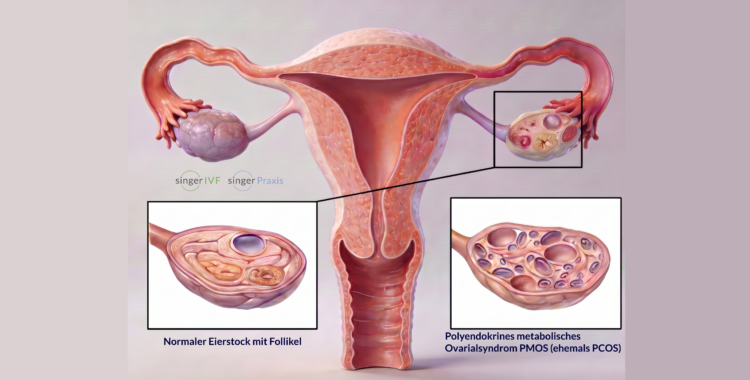
PCOS is not a single defect, but a combination of factors: Ovulation occurs less frequently or irregularly, the body produces slightly higher levels of male hormones (androgens), and often, an ultrasound reveals many small follicles in the ovaries. The name is misleading—these are not “cysts,” but perfectly normal follicles, just in large numbers. This is precisely why the condition was internationally renamed in 2026: PMOS, polyendocrine metabolic ovarian syndrome—a name that reflects the fact that far more than just the ovaries are involved, namely hormonal balance, metabolism, skin, and mental health (Lancet Consensus 2026). See also the detailed explanation on our page “Current Research in Gynecology.” We will continue to use the familiar term PCOS here until the new name has become established. The condition manifests itself in a wide variety of ways: through irregular or absent menstrual periods, changes in the skin and hair (acne, increased body hair), metabolic changes, difficulties with family planning, or mood swings. The severity varies from woman to woman—and even slim women can be affected.
For diagnosis, we use the internationally recognized Rotterdam criteria: PCOS is present if two out of three criteria are met—infrequent or absent ovulation, signs of elevated male hormones (on the skin and hair or in the blood), and the typical ultrasound finding (or an elevated AMH level in the blood). If the first two criteria are already clear, an ultrasound isn’t even necessary (International PCOS Guidelines 2023).
It is important to us not to label patients too early: In the first few years after the first period, many small follicles are completely normal—the ultrasound image only becomes meaningful about eight years after the first period. For younger women, we therefore make the diagnosis based on the menstrual cycle and signs of androgen excess, not on ultrasound. And we rule out other causes with similar presentations—such as a thyroid or hormonal disorder.
We do not treat PCOS with a “one-size-fits-all” approach, but rather based on your symptoms and goals. To do this, we focus on five pillars, which we use individually or in combination depending on the situation.
Pillar 1 – Foundation: Lifestyle and Metabolism. The foundation consists of healthy habits that are practical for everyday life—exercise, a balanced diet, and good sleep. If you’re overweight, the focus is on moderate weight loss: even a few kilograms can noticeably improve your menstrual cycle, skin, and metabolism. If you find it difficult to lose weight—this is often due to the insulin resistance typical of PCOS, which makes it harder for the body to lose weight, and is not a matter of willpower. That’s why we’ll guide you at a pace that suits you: supportive, without pressure, and without a rigid target weight; and a healthy lifestyle is beneficial even if your weight remains the same. We’ll monitor your metabolism (blood sugar, lipids) and discuss whether a medication like metformin is appropriate (International PCOS Guidelines 2023).
Pillar 2 – Family Planning or Contraception. This depends entirely on your stage of life. The vast majority of women with PCOS can have children. If you’re considering family planning, ovulation can be specifically stimulated—usually with pills like letrozole, or with injectors of low-dosed FSH hormone. If you’re not currently considering family planning, we’ll choose a form of birth control that both regulates your cycle and can improve your skin.
Pillar 3 – Skin and Hair. Acne, excessive body hair (hirsutism), and thinning hair on the scalp are often due to slightly elevated androgen levels—and they respond well to treatment. Depending on your preferences, we combine hormonal approaches (such as a combined oral contraceptive or antiandrogen medications) with cosmetic options. It takes a little patience before you see results, but it’s worth it.
Pillar 4 – Protecting the Endometrium. If periods are absent for an extended period, the endometrium can build up too thickly. To prevent this from becoming a problem, we ensure regular bleeding—for example, with a progestin or a birth control pill (more on this → “Menstrual Cycle and Bleeding Disorders”).
Pillar 5 – Considering accompanying symptoms. PCOS is about more than just the menstrual cycle and skin. We therefore also pay attention to common accompanying symptoms: pauses in breathing during sleep (sleep apnea), as well as mood swings, anxiety, and depressive episodes—not to alarm you, but to provide early help if these issues affect you (International PCOS Guidelines 2023).
PCOS usually doesn’t go away completely, but it can be well managed over the years—and many symptoms improve once the right adjustments are made. Over time, PCOS increases the risk of type 2 diabetes (and, during pregnancy, gestational diabetes)—no cause for concern, but the reason why we regularly monitor your metabolism (International PCOS Guidelines 2023). We’ll adjust your treatment plan together with you as your life circumstances change.
More articles
on this topic
No posts found.
Medical content reviewed by Michael Singer, M.D. –