Pregnancy Diabetes (Gestational Diabetes)
Pregnancy Diabetes (Gestational Diabetes)
Important to Recognize and Treat
Gestational diabetes is a temporary form of diabetes that occurs during pregnancy and usually goes away after childbirth. First, let’s get one thing straight because it’s important: It’s common—about one in ten pregnant women is affected—it usually causes no symptoms, and it responds well to treatment. So a diagnosis like this is neither your fault nor a reason to panic. We routinely screen for it so that we can act early and provide you and your child with the best possible care.
During pregnancy, hormones cause insulin—the hormone that lowers blood sugar—to be less effective. In some women, this causes blood sugar levels to rise above healthy levels. If blood sugar remains too high for an extended period, the baby also receives too much sugar; it may grow too large, which can complicate delivery, and the newborn may have low blood sugar after birth. The good news: If blood sugar is well controlled, pregnancy and childbirth generally proceed normally.
Between the 24th and 28th weeks, we offer all pregnant women an oral glucose tolerance test (oGTT). You’ll come in on an empty stomach; we’ll measure your blood sugar, then you’ll drink a precisely measured sugar solution, and we’ll measure your blood sugar again after one hour and after two hours. Even a single elevated reading is sufficient for a diagnosis. The test takes about two hours, during which you’ll remain at our clinic.
Some women are at increased risk—for example, if they are overweight, had gestational diabetes in a previous pregnancy, have a family history of diabetes, previously gave birth to a very large baby, or have PCOS. For these women, blood sugar should be tested earlier in pregnancy (SGGG 2023). If this early test is normal, we will still perform the standard glucose tolerance test between the 24th and 28th weeks.
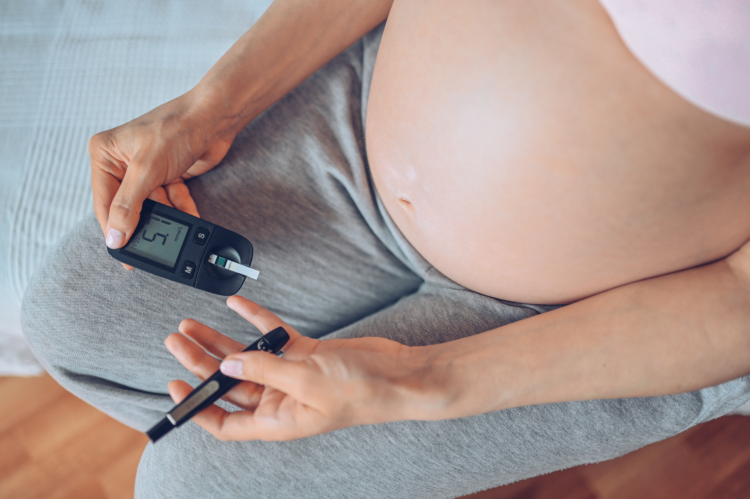
If the test indicates gestational diabetes, it’s easy to manage. The vast majority—about 80 percent—don’t need any medication at all: With an adjusted diet, a little more exercise, and a few self-monitoring blood glucose tests, blood sugar levels usually stabilize well. Only a small minority requires additional insulin, which is safe for the baby. We’ll work closely with you throughout this process—often in collaboration with a nutritionist or diabetes counselor—and monitor your baby’s growth via ultrasound. The goal isn’t a perfect blood sugar level, but a healthy pregnancy—and with the right approach, that’s very achievable.
After giving birth, gestational diabetes usually goes away on its own. About six to twelve weeks later, we’ll perform another oral glucose tolerance test to make sure everything has returned to normal. Long-term follow-up is important afterward: People who have had gestational diabetes are at increased risk for type 2 diabetes later in life. Therefore, it’s best to have your fasting blood sugar checked once a year by your primary care physician—this way, diabetes can be detected early. A healthy lifestyle that includes exercise and a balanced diet also significantly reduces the risk. And if you become pregnant again: Anyone who has had gestational diabetes once has an increased risk in a subsequent pregnancy—which is why we perform early screening right at the start.
More articles
on this topic
No posts found.
Medical content reviewed by Michael Singer, M.D. –