Nutrition and Indulgences During Pregnancy
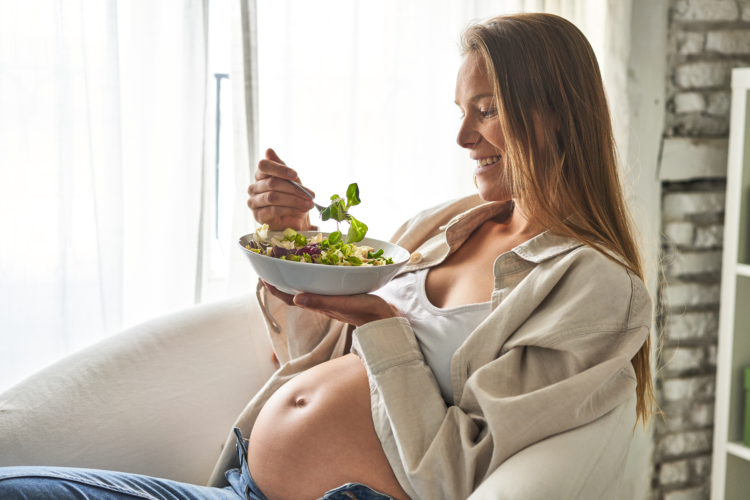
Nutrition and Indulgences During Pregnancy
What’s Good for You, What You Should Avoid
There are many rules—and even more uncertainty—surrounding eating during pregnancy. The good news: You can still enjoy most things. You also don’t have to eat “for two”—your energy needs only increase slightly. What’s important is a balanced selection, a few key nutrients, and a handful of foods you’re better off avoiding. Here are the essentials, without any finger-wagging.
Eat a balanced and varied diet: plenty of vegetables and fruits, dairy products every day, whole-grain foods, fish regularly (1 to 2 times a week), meat, and plant-based proteins like legumes. Drink enough—preferably water or unsweetened tea (about 1.5 to 2 liters per day). Wash vegetables and fruits thoroughly before eating. That’s usually all it takes: The additional energy requirement is small—only in the last trimester is it roughly equivalent to an extra snack.
A few nutrients deserve special attention—let’s take a look at them together:
A multivitamin supplement formulated for pregnancy is a good safeguard—but it is no substitute for a balanced diet.
Some foods may contain pathogens that can be dangerous during pregnancy (such as Listeria or Toxoplasma). It’s best to avoid these for the next few months:
There are many simple steps you can take in everyday life: Wash your hands, cutting board, and knife thoroughly after handling raw meat; cook food thoroughly; and wash vegetables and fruits thoroughly.
Alcohol. It is well established that drinking large amounts of alcohol or drinking regularly can harm the baby. Whether even very small amounts are harmful has not been conclusively determined by science—an occasional small glass of wine or sparkling wine is generally considered safe. However, it’s best to avoid regular consumption entirely.
Smoking. Smoking affects the child throughout the entire pregnancy and increases the risk of growth disorders, premature birth, and other problems. It’s worth quitting at any stage—we’re happy to support you in doing so.
Caffeine. One to two cups of coffee a day are fine. Keep in mind that black and green tea, cola, and chocolate also contain caffeine.
Cannabis and other drugs. Please avoid these entirely during pregnancy. If you need support with this, please talk to us—confidentially and without judgment.
It’s perfectly possible to follow a vegetarian diet during pregnancy. With a vegan diet, ensuring an adequate supply of vitamin B12 (and several other nutrients) is crucial—we’ll closely monitor this and provide targeted supplementation. And don’t worry: you don’t need to avoid nuts or other foods as a precaution to prevent allergies in your child; that won’t help.
Some weight gain is a natural part of pregnancy and is actually encouraged—your body is building up reserves and nourishing your baby. How much weight gain is appropriate in your specific case depends on your starting weight; we’ll review this together. Diets and appetite suppressants are off-limits during pregnancy. It’s not about a specific number on the scale, but about healthy development for you and your baby.
You don’t have to remember all of this. During your checkups, we’ll work together to make sure you’re getting the nutrition you need and answer any questions you have about eating. When in doubt, it’s better to ask one more time than to unnecessarily restrict yourself.
More articles
on this topic
No posts found.
Medical content reviewed by Michael Singer, M.D. –