Vaccinations During Pregnancy
Vaccinations During Pregnancy
Protecting Your Baby and Yourself
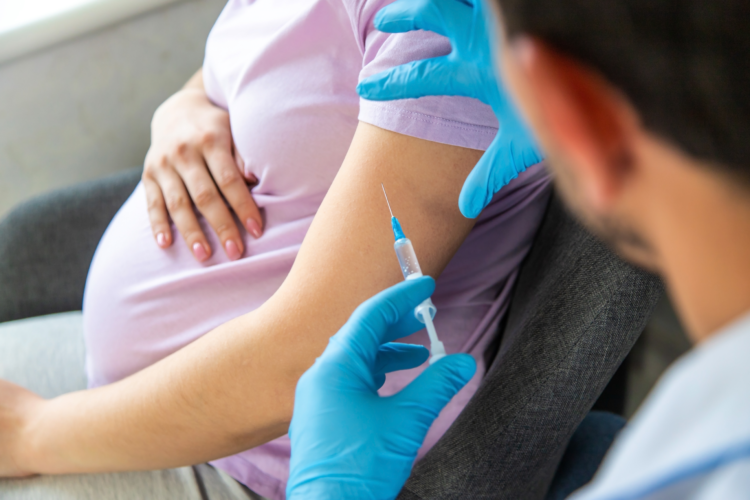
Vaccinations during pregnancy serve a dual purpose: they protect you—and your baby. This is because a vaccination passes on protection to your child through your blood, which lasts during the first few months of life before the child can be vaccinated on their own (this is called “nest protection”). The vaccinations recommended during pregnancy have been thoroughly studied and are safe. We’ll review your vaccination record with you and discuss which vaccinations are appropriate for you and when.
Whooping cough (pertussis). We recommend getting this vaccination anew during every pregnancy, ideally during the second trimester (between weeks 13 and 26)—regardless of when you were last vaccinated. Whooping cough can be dangerous for newborns; the vaccination provides your child with protection for the first few months of life, until they receive their own vaccinations. If you missed the appointment, we’ll catch up on the vaccination as early as possible in the third trimester.
Flu (Influenza). During flu season (fall and winter), we recommend the flu vaccine at any stage of pregnancy, even as early as the first trimester. Pregnant women are at higher risk of severe illness, and the baby also benefits from this protection. It is an inactivated vaccine that is safe for both mother and baby (SGGG, Expert Letter No. 55).
RSV. The RSV virus is the most common cause of severe respiratory infections in infants. A vaccination between the 32nd and 36th weeks protects your baby during its first RSV season—recommended if the due date is between October and March; the costs are covered (SGGG, Expert Letter No. 91). Alternatively, the newborn can receive a protective antibody infusion immediately after birth; only one of these two options is necessary, and we will discuss this with you.
COVID-19. Pregnant women without other risk factors are no longer automatically considered to be at high risk. Therefore, we no longer recommend the COVID-19 vaccine across the board, but rather based on your personal risk profile—such as certain pre-existing conditions—especially in the fall and winter. We’ll discuss this with you on an individual basis.
Yes, absolutely. The vaccines recommended during pregnancy are inactivated vaccines and have been well-studied for many years—they are safe for you and your child. The most common reaction is mild soreness at the injection site, and sometimes a little fatigue. We can put your mind at ease regarding concerns that a vaccine might harm your child: The opposite is true—it provides protection.
Not all vaccines can be administered during pregnancy. So-called live vaccines—such as those against measles, mumps, and rubella (MMR) or chickenpox (varicella)—are not administered during pregnancy (Swiss Immunization Schedule). It’s best to discuss these vaccinations before becoming pregnant (more on this → “Before Pregnancy”). And if you were vaccinated without knowing you were pregnant: This is no cause for concern and no reason to doubt the pregnancy.
Please bring your vaccination record with you for review. Together, we’ll determine which vaccinations are due during pregnancy and which ones are best to catch up on or get a booster for after the birth. A booster (such as for whooping cough) for your partner and close caregivers can also provide additional protection for the newborn.
The recommended vaccinations against whooping cough, the flu, and RSV are covered by basic health insurance.
More articles
on this topic
No posts found.
Medical content reviewed by Michael Singer, M.D. –